



Salesforce Business Analyst Course
The Salesforce Business Analyst Course is a comprehensive professional training program designed to equip learners with the technical, analytical, and communication skills required to succeed in today’s fast-growing Salesforce ecosystem. As organizations across industries continue adopting Salesforce CRM solutions to manage sales, customer service, marketing, and business operations, the demand for skilled Salesforce Business Analysts has increased significantly. This course is specially structured to help students, fresh graduates, working professionals, and career switchers gain expertise in Salesforce platforms while understanding the business analysis processes required to bridge the gap between business stakeholders and technical teams.
A Salesforce Business Analyst plays a critical role in understanding business requirements, identifying process improvements, and translating organizational needs into effective Salesforce solutions. This course focuses on developing both functional Salesforce knowledge and practical business analysis skills, enabling learners to work confidently in real-world Salesforce projects. The program combines theoretical concepts, live demonstrations, practical exercises, real-time case studies, and project-based learning to ensure students gain industry-ready experience.
The course begins with a strong foundation in the Salesforce ecosystem, introducing learners to Salesforce CRM, cloud technologies, and the role of Salesforce in digital transformation. Students gain an understanding of various Salesforce cloud offerings such as Sales Cloud, Service Cloud, and Marketing Cloud. The program explains how organizations use Salesforce to streamline customer relationship management, automate workflows, improve productivity, and enhance customer experiences. Learners also understand different user roles, business processes, and responsibilities involved in Salesforce implementation projects.
One of the key highlights of the course is its focus on business analysis fundamentals. Students learn how to identify business needs, gather requirements, analyze existing business processes, and design future-state solutions. The course provides detailed knowledge about stakeholder management, communication techniques, requirement elicitation methods, and documentation practices. Learners understand how to conduct stakeholder interviews, organize workshops, collect business requirements, and create professional documentation that aligns business goals with technical implementation strategies.
Requirement gathering is one of the most important responsibilities of a Salesforce Business Analyst, and this course provides extensive training in various requirement elicitation techniques. Students learn how to gather functional and non-functional requirements, create process flow diagrams, document use cases, and write effective user stories. The course also covers acceptance criteria creation, requirement validation, and prioritization methods that help teams deliver successful Salesforce solutions. Learners are trained to interact confidently with clients, business users, developers, administrators, and QA teams throughout the project lifecycle.
Another major component of the program is business process mapping and workflow analysis. Students gain practical experience in analyzing existing organizational workflows and identifying opportunities for automation and process improvement. The course teaches how to create business process documentation, swimlane diagrams, workflow structures, and approval processes. Learners understand how Salesforce automation tools such as Flow and Process Builder can improve operational efficiency and reduce manual efforts within organizations.
The Salesforce functional knowledge section of the course focuses on helping students understand the core Salesforce platform from a business and functional perspective. Learners gain hands-on exposure to standard objects, custom objects, object relationships, page layouts, reports, dashboards, and automation tools. Students also explore Salesforce data models, business reporting capabilities, and CRM functionalities that are widely used across industries. This functional knowledge enables learners to communicate effectively with Salesforce developers and administrators while participating actively in project discussions and solution planning.
Documentation and user story writing are essential skills for every Business Analyst, and this course provides detailed training on creating professional business documents. Learners are trained to prepare Functional Requirement Documents (FRDs), Business Requirement Documents (BRDs), user stories, use cases, traceability matrices, and process documentation. Students also learn how to define clear acceptance criteria and maintain documentation standards that support Agile project environments. By mastering documentation techniques, learners become capable of managing project requirements efficiently and ensuring smooth communication between teams.
The course also emphasizes Agile and Scrum methodologies, which are widely used in Salesforce implementation projects. Students learn how Agile project management works, including sprint planning, backlog grooming, daily stand-up meetings, sprint reviews, and retrospectives. Learners understand the role of a Business Analyst within Agile teams and gain knowledge of collaboration tools such as Jira and Confluence. This Agile-focused training helps students adapt to modern project environments and work efficiently in collaborative development teams.
Testing and User Acceptance Testing (UAT) are important stages in Salesforce projects, and the course provides practical guidance on testing methodologies and quality assurance processes. Students learn how to create test scenarios, test cases, and validation documents. The course explains how Business Analysts support UAT activities, coordinate with users, and ensure that implemented Salesforce solutions meet business expectations. Learners also gain knowledge about defect tracking, solution validation, and quality assurance best practices that contribute to successful project delivery.
One of the strongest advantages of this Salesforce Business Analyst Course is the emphasis on real-world project implementation. Students work on live projects and end-to-end Salesforce project simulations that replicate actual business scenarios. Through these projects, learners gain hands-on experience in requirement gathering, process analysis, workflow design, documentation, stakeholder communication, and project collaboration. Real-time project exposure helps students build confidence and prepares them for practical challenges faced in professional Salesforce environments.
The course is delivered by experienced Salesforce professionals and industry experts who possess extensive implementation experience across multiple domains. Trainers provide personalized mentorship, career guidance, and practical insights based on real industry use cases. The training methodology focuses on interactive learning, hands-on exercises, live demonstrations, assignments, and continuous evaluation to ensure students develop strong conceptual clarity and practical expertise.
In addition to technical and functional training, the course also includes career support services that help students prepare for successful job opportunities in the Salesforce industry. Learners receive resume-building assistance, LinkedIn profile optimization guidance, interview preparation sessions, mock interviews, and career counseling support. The program also provides access to internship opportunities, job assistance, and placement support to help learners secure roles in top organizations.
The Salesforce ecosystem offers excellent career opportunities for professionals with Business Analyst skills. After completing this course, learners can apply for various roles such as Salesforce Business Analyst, Salesforce Functional Consultant, CRM Analyst, Salesforce Administrator, Business Process Analyst, Product Analyst, and Project Coordinator. The increasing adoption of Salesforce by global organizations has created high demand for professionals who can analyze business requirements and deliver effective Salesforce solutions.
The course is suitable for fresh graduates, MBA students, business professionals, IT professionals, CRM users, project managers, customer support executives, and anyone interested in building a career in Salesforce and business analysis. No advanced coding knowledge is required, making this program accessible to both technical and non-technical learners. The structured curriculum, hands-on learning approach, and practical training make it an ideal choice for beginners as well as experienced professionals looking to upgrade their skills.
Another important feature of the program is its flexible learning structure. Learners can benefit from live instructor-led sessions, recorded learning resources, practical assignments, and lifetime access to learning materials. The course also includes LMS access, lab support, project assistance, and continuous mentorship, allowing students to learn at their own pace while receiving professional guidance throughout their learning journey.
Certification support is another valuable component of the course. Students receive guidance for industry-recognized Salesforce certification exams, helping them prepare effectively through mock tests, practice sessions, and certification-oriented training. The course completion certificate validates learners’ knowledge and practical expertise in Salesforce Business Analysis, increasing their credibility in the job market.
With organizations increasingly focusing on digital transformation, CRM optimization, and customer-centric business strategies, Salesforce Business Analysts have become highly valuable professionals in the modern workforce. This course is carefully designed to provide learners with the skills, confidence, and practical exposure needed to succeed in this competitive and rewarding field. By combining Salesforce functional expertise, business analysis methodologies, Agile practices, testing knowledge, and real-time project implementation, the program ensures students are fully prepared for industry challenges and career growth opportunities.
The Salesforce Business Analyst Course not only teaches learners how to use Salesforce tools but also helps them understand how businesses operate, how customer processes are managed, and how technology solutions can drive organizational success. Through expert mentorship, practical training, real-world projects, and career support, this course empowers learners to become successful Salesforce professionals capable of contributing effectively to business transformation initiatives across industries.
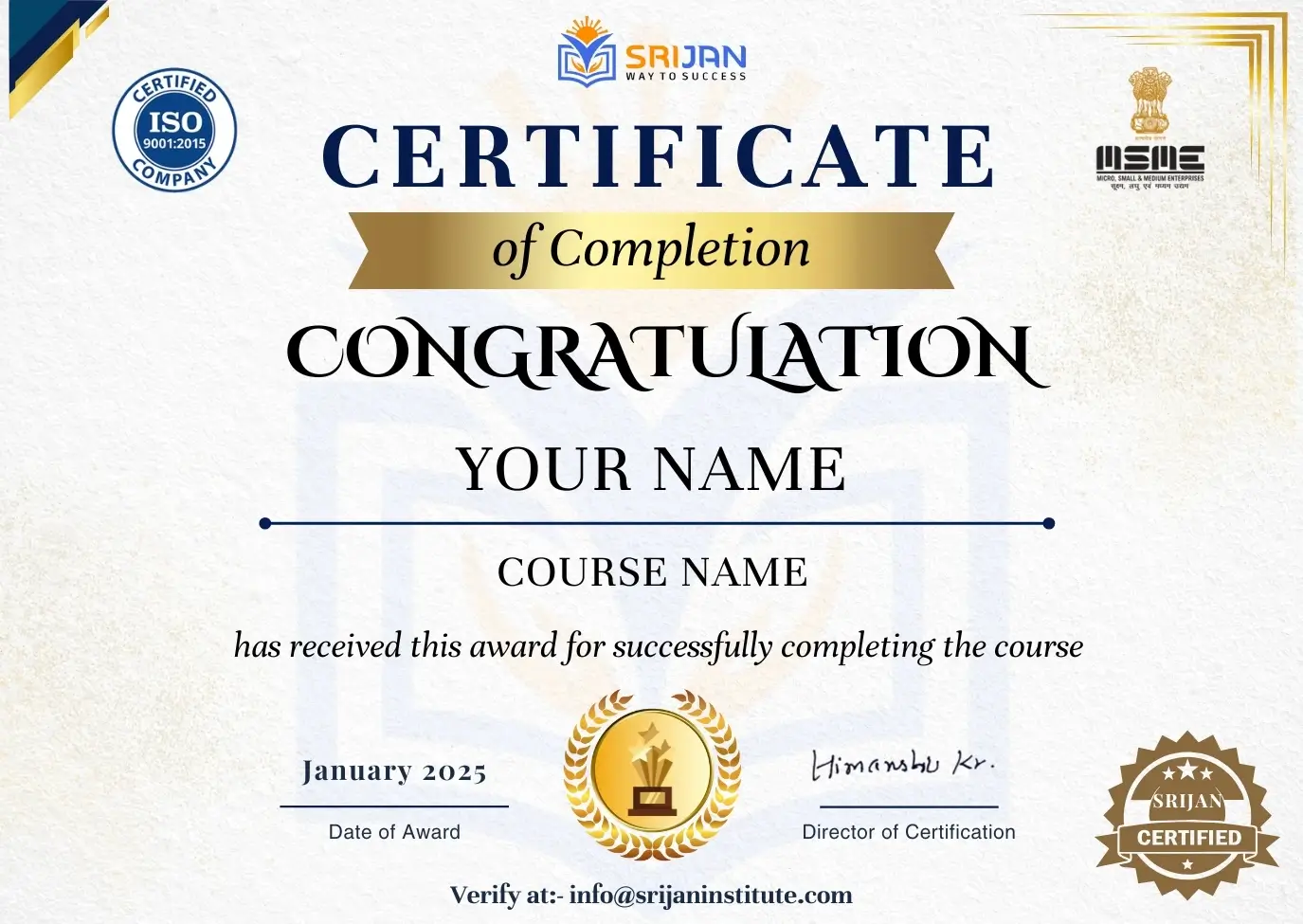
Upon successful completion of the Salesforce Business Analyst Course, learners will receive an industry-recognized course completion certification from Srijan Institute. The certification validates practical skills in Salesforce CRM, business analysis, requirement gathering, process mapping, Agile methodologies, testing, and project implementation. Students also receive guidance for global Salesforce certification preparation, resume building, and LinkedIn profile enhancement to boost career opportunities in top organizations.
Salesforce Business Analyst Course Curriculum
Module 1: Introduction to Salesforce Ecosystem
Overview of Salesforce CRM
Key Cloud Offerings
User Roles & Responsibilities
Role of a Business Analyst in Salesforce Projects
Module 2: Business Analysis Fundamentals
Introduction to Business Analysis
Identifying Business Needs
Defining Business Objectives
Current State vs Future State Process Analysis
Module 3: Requirement Gathering Techniques
Stakeholder Interviews & Workshops
Surveys & Requirement Elicitation Methods
Process Flow Diagrams & Use Cases
Writing User Stories
Module 4: Business Process Mapping
Understanding Workflows & Approval Processes
Data Flow Analysis
Process Documentation
Creating Swimlane Diagrams
Module 5: Salesforce Functional Knowledge
Standard & Custom Objects
Fields & Object Relationships
Automation Tools (Flow, Process Builder)
Reports & Dashboards for Business Analysis
Module 6: Documentation & User Stories
Writing Effective User Stories
Acceptance Criteria Definition
Functional Requirement Documents (FRD)
Traceability Matrix Maintenance
Module 7: Collaboration & Project Management
Working with Developers, Admins & QA Teams
Agile & Scrum Methodologies
Sprint Planning & Backlog Grooming
Tools: Jira & Confluence
Module 8: Testing & UAT (User Acceptance Testing)
Preparing Test Scenarios & Test Cases
Supporting UAT
Requirement Validation
Ensuring Solution Quality
Module 9: Real-World Project & Certification
End-to-End Salesforce Project Simulation
Requirement Gathering & Process Design
Documentation & Solution Review
Final Assessment & Certification Guidance
0
Satisfied Students0
Years of Excellence0
Practical TrainingWhat Our Students Love About Us
Real stories from learners who advanced their careers with our SAP courses.
Course Certification
Upon successful completion of the Salesforce Business Analyst Course, learners will receive an industry-recognized course completion certification from Srijan Institute. The certification validates practical skills in Salesforce CRM, business analysis, requirement gathering, process mapping, Agile methodologies, testing, and project implementation. Students also receive guidance for global Salesforce certification preparation, resume building, and LinkedIn profile enhancement to boost career opportunities in top organizations.
Our Hiring Partners









Our Popular Instructors
Meet our most talented and popular instructors

Mr. Nilesh Pandey
Salesforce Instructor

Mr. Dushyant Kateria
Salesforce Instructor

Mr. Nishant Sharma
Salesforce Instructor
Choose Us
Why Choose Our Salesforce Business Analyst Course
-
01
Learn Salesforce CRM, business analysis, Agile methodologies, and real-time project implementation with hands-on practical training.
-
02
Gain expertise in requirement gathering, user stories, process mapping, dashboards, automation tools, and UAT testing.
-
03
Get certification guidance, internship opportunities, resume support, and placement assistance for Salesforce Business Analyst careers.
Choose Your Salesforce Business Analyst Course Learning Plan
Pick the Salesforce Business Analyst Course batch that best fits your schedule—ongoing, upcoming, and recorded options.
- First Batch Start Date: 14th April 2026
- Second Batch Start Date: 28th April 2026
($40,000)
- First Batch Start Date: 12th May 2026
- Second Batch Start Date: 26th May 2026
($40,000)
Learn at Your Own Pace
Salesforce Business Analyst Course FAQs
This course is suitable for fresh graduates, working professionals, MBA students, business analysts, CRM users, and anyone interested in building a career in Salesforce and business analysis. No advanced coding knowledge is required.
You will learn Salesforce CRM fundamentals, requirement gathering, stakeholder management, business process analysis, Agile & Scrum methodologies, user story writing, reports & dashboards, UAT testing, workflow automation, and real-world project implementation.
Yes, the course includes hands-on practical sessions, real-time project implementation, case studies, assignments, and end-to-end Salesforce project simulations to provide industry-level experience.
Yes, upon successful completion of the course, learners receive an industry-recognized course completion certificate along with guidance for global Salesforce certification preparation.
Level Up Your Skills with Our Salesforce Business Analyst Course Today!
Unlock Your Career Potential with Our Salesforce Business Analyst Course and Start Learning Today and Gain the Skills Employers Demand!
-
Course Category
Salesforce -
Course Lectures
-
Course Duration
50 -
Course Language
English -
Quiz & Exam
Not Available -
Course Level
-
Course Learning Mode
online
